Monday, January 30, 2012

Class 1/30/12 - Reading 3.2

Salut mes amants des maths!

C'est lundiiii (It's monday).
Today we had a group give a presentation about the invention of zero. I thought it was actually pretty interesting considering many people don't really think about where the number zero came from; I think we take the number for granted for the most part. To actually learn about its ancient origin(s) was a refreshing change of pace. We learned that there were basically 2 ancient uses for zero: 

        • Placeholder (symbol) -   (Babylonians, Mayans,...); The Babylonian and Mayan civilization were two of the first to begin using zero as a placeholder to minimize confusion, promote organization in their numeral systems, and for practical uses such as calendar making in the case of the Mayans.
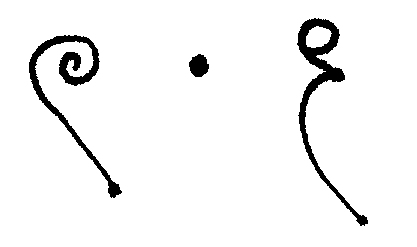

  • Value (number) - (India, ....); India was the first to actually use zero as a number value describing quantity. 


Along with the invention of the invention of zero came the rules that today serve as common notions in the math world:

  1. 0 + (-x) = -x
  2. 0 + x = x 
  3. 0 + 0 = 0 
  4. (x) + (-x) = 0 
  5. -x/0 , x/0  undefined 
  6. 0/x , 0/-x  = 0
  7. 0/0  undefined
    After the students finished their presentation, Dr. Daddel began lecture starting with the history of Eratosthenes, a librarian well-known for his feat of measuring the circumference of Earth.
    As illustrated in the picture above, Eratosthenes accomplished this measurement by acquiring other values such as the distance between Syene and Alexandria (5,000 stadia) and that angle between the vertical pole and sunlight (712') among other values.


    In addition, Dr. Daddel talked the proof of Proposition I-47 (The Pythagorean Theorem in Euclid's Elements): [In right-angled triangles the square on the hypotenus is equal to the sum of the squares on the legs] and parallel lines, specifically as they pertain to Euclid's Fifth Postulate: [If a straight line intersecting two straight lines make the interior angles on the same side less than two right angles, the two straight lines, if produced indefinitely, meet on that side on which the angles are less than two right angles.]


    He ended class talking about some of the material that would be on our first midterm (Yikes! I'm so scared!)


    Well, until next time, mes amis.

    Bisous!


    Friday, January 27, 2012

    Class 1/27/12 - 3.1 & 3.2


    Salut mes amants des maths! 

    Aujourd'hui c'est vendredi et nous avons eu un petit test. (Today is Friday and we had a quiz) :( I don't think it went too well, but I'm trying to be optimistic about the results. 
    Today, we finally started Chapter 3 which is basically an introduction to the most important mathematical text of Greek times and probably of all time: The Elements (a work of 13 books) of Euclid. This book has been translated into countless languages and has appeared in more editions than any work other than the Bible. The  book simply consists of definitions, axioms, theorems, and proofs. Nevertheless, it has been intensively studied and provides an example of how "pure mathematics" should be written. Below are different elements of Book I of the work. 


    Definitions: 
    1. A point is that which has no parts
    2. A line is a breadthless length. 
    3. The ends of a line are points. 
    4. A straight line is a line which lies evenly with the points on itself. 
    5. A surface is that which has length and breadth only. 
    6. ......
    Common Notions: 
    1. Things which equal the same thing are also equal to one another. (a=x, b=x ==> a =b)
    2. If equals are added to equals, then the wholes are equal. 
    3. If equals are substracted from equals, then the remainders are equal. 
    4. Things which coincide with one another equal one another. 
    5. The whole is greater than the part. 
    Postulates:
    Postulate 5
    1. To draw a straight line from any point to any point
    2. To produce  a finite straight line continuously in a straight line.
    3. To describe a circle with any center and radius. 
    4. That all right angles equal one another
    5. That, if a straight line falling on two straight lines makes the interior angles on the same side less than two right nagles, the two straight lines, if produced indefinitely, meet on that side on which are the angles less than the two right angles. 

    Pythagorean Theorem: In right-angled triangles the square on the side opposite the right angle equals the sum of the squares on the sides containing the right angle. 

    That's all for now! Until next time!
    Bisous

    -MB

    Wednesday, January 25, 2012

    Class 1/25/12 - 2.1.4, 2.2, 2.3


    Salut mes amants des maths!

    The class is once again not lined up with the tentative schedule, so we'll be covering some topics again and looking at some details that are different from the ones previously seen. According to historical evidence we have in relation to the Greek, there is an obvious shift in the focus and objectives of Greek mathematicians; they were beginning to incline more towards the idea of proofs and moving away from numerical calculation. This shift is further exemplified in the mid-fifth century attempts to solve two geometric problems, problems that went to on to occupy Greek mathematicians for centuries: the squaring of the circle (already attempted in Egypt) and the duplication of the cube (as noted in the oracle). The numerous attempts to solve these problems as well as the additional one of trisecting an angle support the belief that Greek mathematics was great focused on geometrical problem solving, which was relevant with respect to the various theorems found in the major extant works of Greek mathematics. 


    Hippocrates of Chios (mid-fifth centure BCE) was the first to attempt both geometrical problems. It is thought that Hippocrates realized the similarity between doubling the cube (picture above-left) and the simpler problem of doubling a square of side a. So, he was the first to reduce the problem of doubling the cube of side a to trying to find two mean proportionals b, c, between a and 2a. Since, if a : b = b : c = c : 2a, then a^3 : b^3 = (a : b)^3 = (a : b)(b : c)(c : 2a) = a : 2a = 1 :2 and b^3 = 2a^3. However, it was not possible to construct the two mean proportionals with only a straightedge and compass. 
    Similarly, Hipprocrates made progress with respect to the problem of squaring a circle, basically, by showing that certain lunes (picture above-right) could be "squared," that is to say, their areas could be shown equal to certain regions bounded by straight lines. 

    In addition to these geometrical problems, lecture covered more of the lives of two very well known mathematicians: Plato and Aristotle. 

    Plato (429-347): 
    • From his youth aspired to participate in public affairs
    • Had a good education
    • Met Socrates at age 20 and studied under him for 8 years
    • Once Socrates was condemned to death in 399 BC, Plato and company retired briefly to Megara to pursue the Truth and master the "art of argument" 
    • He traveled about Greece on to Egypt, Southern Italy, and Sicily. 
    • He also studied under Archytas, improving his knowledge about Pythagoras and his findings. 
    • He returned to Athens in 388 BC. 
    • Upheld the philosphies "Let no man enter who is ignorant of Geometry"  & "Everything is in flux, nothing is stable"
    Aristotle (384-322): 
    • He was Plato's most famous student 
    • In 335 BC Alexander put Athens under Macedonia 
    • Created his own school "Lyceum" where he lectured for 12 years and introduced the concept of written exams. 


    Well, that's all for now! Until next time, mes amis! 
    Bisous! 

    -MB

    Monday, January 23, 2012

    Class 1/23/12

    Salut mes amis des maths!

    Another day, another lesson on the history of math! 

    Today's lecture went more into detail about the Pythagoreans and what they're various studies entailed. As stated in my previous blog entry, the Pythagoreans were enfatuated with different types of numbers such as odd, even, triangular and other types of numbers to name a few. For example, the form of pythagorean triples is of the from ( n, (n+1)^2 / 2 , (n-1)^2 / 2) where n is odd and (m, (m/2)^2 - 1, (m/2)^2 + 1) where m is even. Also mentioned previously, the pythagoreans were strong believers that the world in all its entirety could always be expressed with numbers; basically, that is to say, numbers could generate everything. The believe in this concept with an almost occult like faith, so you can imagine their surprise at discovering the concept of commensurable versus incommensurable.  


    The Pythagoreans believed everything could be counted, including lengths, but in order to count a length, a measure must be utilized. What the Pythagoreans assumed was that it was always possible to find such a measure that was appropriate for a given problem. If such a unit is found, it becomes the unit and cannot be divided. In particular, it was assumed that it was possible to "find a measure by which both the side of and diagonal of a square could be counted. In other words, there should exist a length such that the side and diagonal of a square are incommensurable; there is no common measure." This is the case in the above picture, portraying two legs of a triangles which measure length 1 and the hypotenuse (diagonal of square) with length square root of two. Since we know the square root of two is irrational, it is obvious to us that the such a value and 1 do not share a common measure, so an appropriate unit cannot be found for this problem. 


    In addition to the Pythagoreans, Dr. Daddel also briefly covered Zeno's Paradoxes (one of which is illustrated above) as well as some background information on Plato. Some of the different facts we learned about Plato were that Socrates was his instructor until he was executed in 399 BC for challenging the authorities, he wrote   "The Republic", didn't care for "practical math", studied different aspects of Geometry, and created his own academic which remained influential in Greek Education even after his death. 

    Until next time, mes amis! 
    Bisous 

    -MB

    Friday, January 20, 2012

    Class 1/20/12 - 2.1.2 & 2.1.3


    Salut mes amants des maths! 


    Today's lecture corresponded to sections 2.1.2 and 2.1.3 dealing with Thales and Pythagoras and his school, respectively. As we enter the subject of Greek mathematics and it's contributions to the general math field, we will discuss various prominent figures who played a significant role in the development of what today is moder math. 

    Thales (c. 624-547 BCE) of Miletus was one of such prominent figures who was said to have discovered several theorems in addition to provided numerous proofs. He is know for proving the following theorems: 

    1. A circle is bisected by any diameter
    2. Base angles of isosceles triangles are congruent
    3. Angles between 2 intersecting straight lines are congruent. 
    4. Two triangles are congruent if they have 2 angles and 1 side conrguent (ASA) 
    5. An angle in a semicircle is 90 degrees.  (This theorem is illustrated below)


    Although Thales was credited with many proofs and discoveries, for many of these presumed accomplishments, we are not exactly aware of how Thales "proved" any of these results, but it appears that he was able to advance some logical arguments. 

    Also, Dr. Daddel spoke of Pythagoras and his school which led to the Pythagorean Brotherhood. There's not a lot of information about Pythagoras (c. 572-497 BCE), but there do exist many extensive but unreliable stories about his life with respect to the amount of time he spent when and where. It is said that after he was forced to leave his native land, he then settled in Crotona and gathered around him a group of disciples that were labeled Pythagoreans, in what was considered a religious and philosophical school. The general philosophy of this school is that the universe in all its aspects could be simply represented by numbers; unfortunately, this strong belief conflicted with their discovery of the concept of incommensurability.  The Pythagoreans studied different types of numbers (i.e. odd, eve, triangular, oblong, etc.) They were able to visually depict such numbers using dots and pebbles. 

    Until next time, mes amis! 

    A+! 
    -MB

    Wednesday, January 18, 2012

    Class 1/18/12

    Salut mes amants des maths!

    Monday was a holiday, but today you get another blog entry! Today's lecture doesn't quite match up with the readings assigned on the tentative schedule so we'll be looking more into sections 2.1 & 2.2 in Friday's blog entry. 
    Today's class dealt with a lot of the material covered in previous sections of chapter 1. Specifically we talked about false position as it was used by both the Egyptian and Babylonian civilizations.
    In the case of the Egyptains--who used it to deal with linear equation and proportional reasoning--the Rhind Papyrus illustrates that the method of false position consists of assuming a convenient but probably incorrect answer and then adjusting it by proportionality. For example, consider the following problem: 

    Problem 26 of the Rhind Papyrus asked to find a quanitty such that when it is added to 1/4 of itself the result is 15. The scribe's solution was as follows: "Assume [the answer is] 4. Then 1 [+ 1/4] of 4 is 5. .  . Mulitply 5 so as to get 15. The answer is 3. Multiply 3 by 4. The answer is 12."

    This interesting procedure used by scribe is used in several other problems similar to this, so one can consider the method an algorithm for the solution of a linear equation of this type. Unfortunately, there is no evidence pointing to the discovery of said algorithm nor information about why it works, but it is obvious that Egyptian scribes were well aware of the idea of proportionality of two quantities.

    For the Babylonians, evidence shows that Babylonian scribes may have also used false position to deal with linear systems of equations. Although, presumably, the Babylonians solved complex single linear equations by false positions, the few problems that thought to show this do not reveal their exact methods; the answer is sometimes simply given as in shown in a problem from tablet YBC 4652 in which the scribe presents the answer to the problem, but doesn't give detailed steps as to how it was found. 


    In addition to false position, lecture also covered the Egyptians approximation of pi which was [(8^2) (4)]/81  = 3.16049. They used this value to calculate the area of a circle with a given diameter. Also, the methods Babylonian scribes used to approximate the value of the square root of a natural number N. Evidence shows that scribes were able to derive the equation (a/2) + (N/2a) where a is the side of the square in the geometric representation of 2ac + c^2 = b = N - a^2. 

    That's all for today, mes amis. Until next time!
     A+!
    -MB

    Friday, January 13, 2012

    Class 1/13/12 - 1.1.2 & 1.1.3

    Salut mes amants des maths!
    C'est vendredi, youpi!
    (Hello, my math lovers! It's Friday, yay!)

    It's finally Friday! What a long first week with so much to do! 
    We had our first quiz today in Math 111. (It was a bit scary indeed)


    So, let's go over what was covered in lecture and what I've read in section 1.2.1, which talks about the methods of computations of the Babylonians and the their number preferences when solving problems. 

    Today, a lot of what we went over had to do with unit fractions. What are unit fractions? Basically, a unit fraction is the reciprocal of any positive integer, 1/n, if you will. The Egyptians only dealt with unit fractions with the special exception of 2/3. Generally, they would represent 1/ n (the nth part) in hieroglyphics by the symbol for the arbitrary integer n below a small oval symbol. Algorithms could then be applied to these unit fractions; the answer then being converted into a unit fraction as well. 


    Related to today's lecture topic of Egyptian mathematics was the approach Egyptians took toward geometry. Like the Babylonians, they had their own way of dealing with geometric problems. For example, the Rhind Papyrus contains several geometric problems consisting of the calculation of several circle areas. With respect to this particular Papyrus, the Egyptian scribe used a procedure described by the formula A = [d-(d/9)]^2


    Pretty cool stuff right? Until next time!
    Bisous!


    -MB

    Wednesday, January 11, 2012

    Reading 1.2 - Class 1/11/12

    Salut mes amants des maths!

    Today, we talked a bit about the region of Mesopotamia ("[land] between rivers" in Ancient Greek) which is a "toponym for the area of the Tigris–Euphrates river system, largely corresponding to modern-day Iraq, northeastern Syria, southeastern Turkey and southwestern Iran."

    Map showing the extent of Mesopotamia
    (Note: The following information is taken both from lecture and section 1.2.1 from the book since they both go hand in hand)
    The subtopic highlighted with respect to Mesopotamia is the civilization of Babylonians and there own interaction with mathematics. By 1700 BCE, Hammurapi, the ruler of Babylon, had expanded his rule to much of Mesopotamia, instituting a legal system that would help regulate developing empire. 

    The Babylonians also left behind a significant amount of documentation of their exploration and use of mathematics. Unlike the Egyptians, their archaeological remains consisted of written upon clay tablets. They also had different systems of numbers, but the standardized system used by scribes for calculations in the "Old Babylonian" period was organized in a base-60 place value system together with a grouping system based on 10 to represent numbers up to 59. They used a vertical stylus stroke on a clay tablet to represent 1 and a titled stroke to represent 10. Grouping of such strokes gave them combinations that formed the other numbers. Below is an example of how their numerals were written. 


    For numbers that are greater than 60, a place value system was used as well. The Babylonians used "places" rather than symbols to represent powers of 60, representing the number of powers to be counted by the digit in each place. 


    Above is an example of the number 3964 written in Babylonian numerals.
     In addition, such clay tablets portray values belonging to organized multiplication tables in addition to the approaches they took to geometric concepts such as the volume of certain solids and the Pythagorean Theorem, specifically the calculation of pythagorean triples. With respect to geometry, Bablyonians showed clever implementation of geometric tools to solve quadratic equations and systems of equations. Moreover, they used a unique problem solving method called false position to solve linear equations.

    Well, that's all for today. Until next time!
    Bisous!

    -MB

    Monday, January 9, 2012

    Reading 1.1

    Reading 1.1, 1/9/11 
     I covered section 1.1. Here's what I learned in a nice sized nutshell:

    Mathematics was considered equivalent to power, it was shared with only a select few, mainly being passed down by oral tradition.
    Most of the documentation we have comes from preserved papyrus and tablets.The discovered papyri, specifically two (Rhind Mathematical Papyrus , Moscow Mathematical Papyrus) have been very helpful in understanding Egyptian mathematics since they contain collections of mathematical problems along with their solutions.
    Egyptians had two number systems, the hieroglyphic and the hieratic system.
    With respect to Algorithms, Egyptian multiplication was based on a continual doubling process while
    Division was done using almost the same method since it is after all the inverse of multiplication. 
    Also, Egyptians had a common way of solving linear equations usually referred to as false position.
    In addition, the papyri, specifically the Rhind Mathematical Papyrus, showed the different geometric problems Egyptian scribes worked to solve; it also shows the Egyptian's approximation version of pi which for them was 8/9. 


    Questions:


    1) What were the two writing styles used for? 
    Hieroglyphics were used for monumental inscriptions while hieratic writing was the one found on the recovered papyri.

    2) What discovery was essential in understanding the language of the Egyptians?
    The Rosetta Stone 


    3) What is the difference between false position and the modern technique we generally use to solve linear equations?
    The key difference is that the scribes would first assume an incorrect answer then proportion that answer to get to the correct one. 


    What happened to the two writing styles of the Egyptians?
    Once Greek domination was in effect, both of these writing styles died out.


    Interesting: 8
    Quality: 8
    Complexity: 6


    Bisous
    -MB