Salut mes amants des maths!
C'est lundiiii (It's monday).
Today we had a group give a presentation about the invention of zero. I thought it was actually pretty interesting considering many people don't really think about where the number zero came from; I think we take the number for granted for the most part. To actually learn about its ancient origin(s) was a refreshing change of pace. We learned that there were basically 2 ancient uses for zero:

 Placeholder (symbol) - (Babylonians, Mayans,...); The Babylonian and Mayan civilization were two of the first to begin using zero as a placeholder to minimize confusion, promote organization in their numeral systems, and for practical uses such as calendar making in the case of the Mayans.
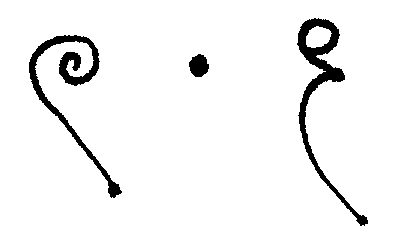
- Value (number) - (India, ....); India was the first to actually use zero as a number value describing quantity.
Along with the invention of the invention of zero came the rules that today serve as common notions in the math world:
- 0 + (-x) = -x
- 0 + x = x
- 0 + 0 = 0
- (x) + (-x) = 0
- -x/0 , x/0 undefined
- 0/x , 0/-x = 0
- 0/0 undefined
After the students finished their presentation, Dr. Daddel began lecture starting with the history of Eratosthenes, a librarian well-known for his feat of measuring the circumference of Earth.
 As illustrated in the picture above, Eratosthenes accomplished this measurement by acquiring other values such as the distance between Syene and Alexandria (5,000 stadia) and that angle between the vertical pole and sunlight (712') among other values.

In addition, Dr. Daddel talked the proof of Proposition I-47 (The Pythagorean Theorem in Euclid's Elements): [In right-angled triangles the square on the hypotenus is equal to the sum of the squares on the legs] and parallel lines, specifically as they pertain to Euclid's Fifth Postulate: [If a straight line intersecting two straight lines make the interior angles on the same side less than two right angles, the two straight lines, if produced indefinitely, meet on that side on which the angles are less than two right angles.]
He ended class talking about some of the material that would be on our first midterm (Yikes! I'm so scared!)
Well, until next time, mes amis.
Bisous!
